
Skip to content

The Centre for the Study of Corruption

X page opens in new windowLinkedin page opens in new window
Governance & Integrity Anti-Corruption Evidence
  • About
  • Our work
    • Research themes
      • Global finance and the enablers of corruption
        • Corruption in Paradise: An ecology of money laundering through real estate in the touristic global south
        • Identifying enabler networks and their vulnerabilities
        • Does transparency bring cleanliness? Offshore financial secrecy reform and corruption control
        • Hiding the beneficial owner and the proceeds of corruption
      • Crisis responses and corruption in vulnerable sectors
        • Addressing corruption in the crisis response of the Malawian health system
        • Crisis emergencies, state responses and ‘windows’ of corruption in Uganda
        • The corrupting effect of political connections in public procurement through crises
      • Corruption risks in global trade and commerce
        • Lessons for combating illicit cross-border trade and money laundering from the Congo
        • Interrogating corruption risk in the climate transition: Trading in voluntary carbon markets
        • International deal-making, beliefs, and local social norms
        • Ethical border trading between Kenya and Uganda for small-scale businesses
      • State capture
        • Building resilience to state capture
        • Resisting state capture from the grassroots: Civil society efforts and public perceptions
        • Building institutional resilience to global illicit financial flows as enablers and drivers of state capture
      • Sectors and Institutions
        • Fighting high-level corruption in Africa: Learning from effective law enforcement
        • Addressing bribery in the Tanzanian health sector: A behavioural approach
        • Detecting and deterring medication theft: A field study in health clinics in Malawi
        • Curbing corruption in procurement using ‘red flags’ risk indicators
      • Integrity systems
        • Cities of integrity: Urban planning and corruption in Africa
        • Can positive public recognition lead to good governance?
        • Harnessing informality: Designing anti-corruption network interventions and strategic use of legal instruments
        • Centralised versus decentralised monitoring to reduce corruption: Insights from comparisons across Indian state
        • Civil service reform and anti-corruption: Does ethics training reduce corruption in the civil service?
    • Fellowship
    • Rethinking Anti-Corruption
    • From Research to Practice
  • Resources
    • Publications
    • Blogs
    • Multimedia
    • Kickback – The Global AntiCorruption Podcast
  • News & events
    • Newsletter
    • GI ACE in the media
    • News from GI ACE
    • Upcoming Events
    • Previous Events
  • Contact
Search:
Search
  • About
  • Our work
    • Research themes
      • Global finance and the enablers of corruption
        • Corruption in Paradise: An ecology of money laundering through real estate in the touristic global south
        • Identifying enabler networks and their vulnerabilities
        • Does transparency bring cleanliness? Offshore financial secrecy reform and corruption control
        • Hiding the beneficial owner and the proceeds of corruption
      • Crisis responses and corruption in vulnerable sectors
        • Addressing corruption in the crisis response of the Malawian health system
        • Crisis emergencies, state responses and ‘windows’ of corruption in Uganda
        • The corrupting effect of political connections in public procurement through crises
      • Corruption risks in global trade and commerce
        • Lessons for combating illicit cross-border trade and money laundering from the Congo
        • Interrogating corruption risk in the climate transition: Trading in voluntary carbon markets
        • International deal-making, beliefs, and local social norms
        • Ethical border trading between Kenya and Uganda for small-scale businesses
      • State capture
        • Building resilience to state capture
        • Resisting state capture from the grassroots: Civil society efforts and public perceptions
        • Building institutional resilience to global illicit financial flows as enablers and drivers of state capture
      • Sectors and Institutions
        • Fighting high-level corruption in Africa: Learning from effective law enforcement
        • Addressing bribery in the Tanzanian health sector: A behavioural approach
        • Detecting and deterring medication theft: A field study in health clinics in Malawi
        • Curbing corruption in procurement using ‘red flags’ risk indicators
      • Integrity systems
        • Cities of integrity: Urban planning and corruption in Africa
        • Can positive public recognition lead to good governance?
        • Harnessing informality: Designing anti-corruption network interventions and strategic use of legal instruments
        • Centralised versus decentralised monitoring to reduce corruption: Insights from comparisons across Indian state
        • Civil service reform and anti-corruption: Does ethics training reduce corruption in the civil service?
    • Fellowship
    • Rethinking Anti-Corruption
    • From Research to Practice
  • Resources
    • Publications
    • Blogs
    • Multimedia
    • Kickback – The Global AntiCorruption Podcast
  • News & events
    • Newsletter
    • GI ACE in the media
    • News from GI ACE
    • Upcoming Events
    • Previous Events
  • Contact

Author Archives: GI ACE

A close-up view of several people seated and engaged in conversation, with the focus on their hands and expressive gestures. Soft natural light filters through a window in the background, highlighting the interaction and nonverbal communication between the group.

Working with social norms to develop effective anti-corruption interventions

Baez Camargo, Integrity Systems, Subnational & SectoralBy GI ACE04/09/2019Leave a comment

GI-ACE researcher Claudia Baez Camargo explores how we can diagnose whether there is a social norm that is underpinning observed behaviours.

The Zambian flag waves on a flagpole against a pale blue sky. The green field features red, black, and orange vertical stripes near the fly end, with an orange eagle in flight positioned above them.

Cities of Integrity project launch in Zambia

Integrity Systems, Subnational & Sectoral, WatsonBy GI ACE28/08/2019Leave a comment

Dorothy Ndhlovu reports on the GI-ACE Cities of Integrity project’s launch in Zambia
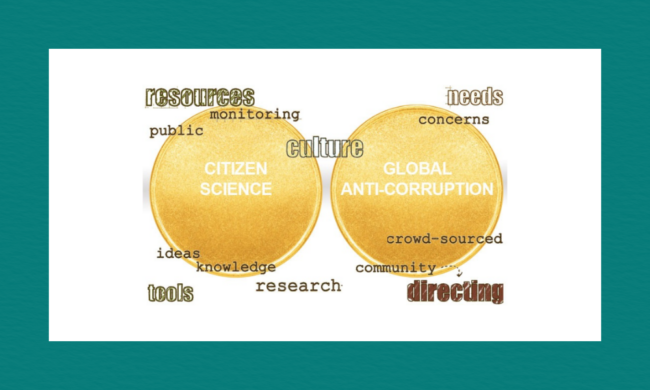
Two overlapping golden circles labeled “Citizen Science” and “Global Anti-Corruption,” surrounded by related words such as resources, monitoring, community, and crowd‑sourced. The shared space between the circles features the word “culture,” highlighting the connection between the two themes.

From citizen science to global anti-corruption: Two sides of the same coin

Chmura, International ArchitectureBy GI ACE27/08/2019Leave a comment

GI-ACE researcher Thorsten Chmura discussed focus of research on transnational corruption in international business, pushing the boundaries of citizen science.
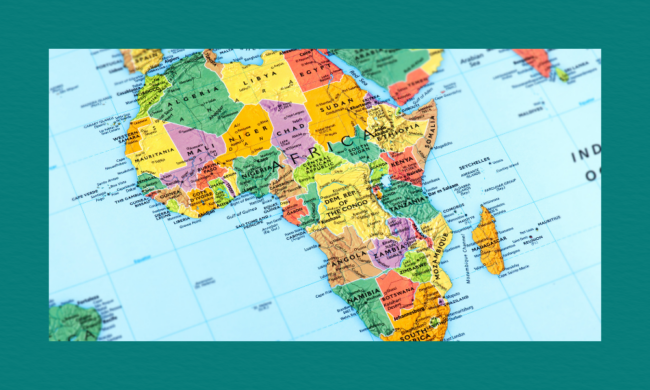
A detailed political map of Africa showing each country in a different color, with national borders and country names clearly labeled. Surrounding oceans and seas, including the Atlantic, Indian, and Mediterranean, frame the continent.

Effective or falling flat? A fresh look at high-level corruption prosecutions in three African jurisdictions

Anders, Integrity SystemsBy GI ACE20/08/2019Leave a comment

Researcher Gerhard Anders discusses GI-ACE research project spearheading the most systematic, comprehensive study to date of the legal frameworks, prosecutorial strategies, institutional constraints, and external influences shaping these countries’ anti-corruption efforts.
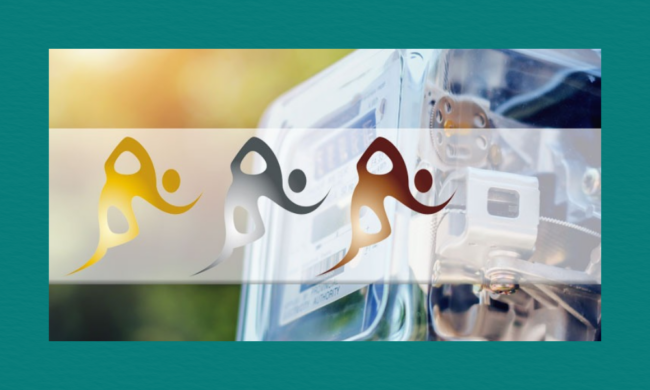
Three stylized human figures in gold, silver, and bronze appear in motion across the center of the image, set against a blurred background featuring the components and display of an electric meter.

‘Usain Bolt’ meters: Reform successes in the electricity sector can be quick, but only the failures get reported

UncategorizedBy GI ACE15/08/2019Leave a comment

A new analysis of corruption and corruption reform in the electricity sectors of Ghana and Kenya suggests a new interpretation of how and why successes against corruption seem so elusive.

A sandy beach with smooth golden sand and footprints leading along the shore, where gentle waves roll in from deep blue water. A small boat and distant landforms appear on the horizon beneath a partly cloudy sky.

Does transparency bring cleanliness? Offshore financial secrecy reform and corruption control

Haberly, International ArchitectureBy GI ACE13/08/2019Leave a comment

Researcher Dan Haberly discusses GI-ACE project attempting to understand how years of specific offshore financial secrecy regulatory reform either have, or possibly have not, impacted the use and shape of illicit financial architectures.

An aerial view of a large construction site with cranes, excavators, deep excavations, and partially built concrete structures. Green safety netting and scattered building materials are visible across the divided work areas.

Strengthening integrity within the urban planning profession to combat corruption in urban development

Integrity Systems, Subnational & Sectoral, WatsonBy GI ACE06/08/2019Leave a comment

The scourge of corruption in urban development has corrosive and far-reaching effects that can hardwire injustice into the fabric of cities and undermine social cohesion and trust within communities.
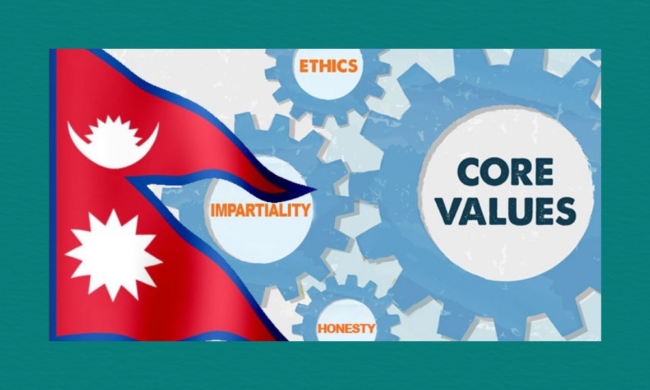
The Nepalese flag appears on the left, with its red double‑pennon shape and white moon and sun symbols. On the right, blue and white interlocking gears display the words “Ethics,” “Impartiality,” “Honesty,” and “Core Values,” visually linking national identity with guiding principles.

Toward a more professional and ethical civil service in Nepal

Integrity Systems, Meyer-Sahling, Subnational & SectoralBy GI ACE30/07/2019Leave a comment

Researcher Jan-Hinrik Meyer-Sahling discusses GI-ACE project taking up the challenge of developing a state-of-the-art ethics training for civil servants in order to contribute to the ambition of building a more professional and ethical civil service in Nepal.
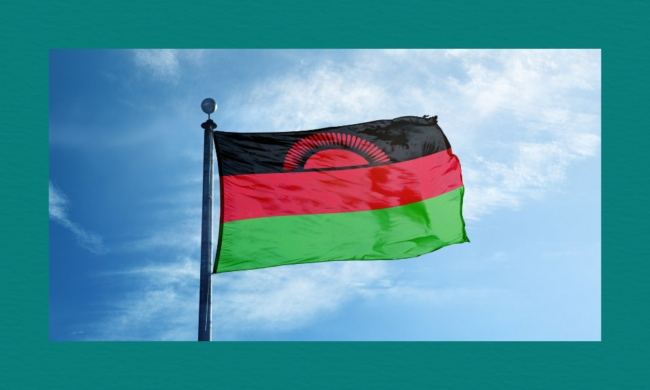
Malawi’s national flag on a tall flagpole against a bright blue sky with scattered clouds; the flag shows black, red, and green horizontal stripes with a red rising sun centered in the black stripe.

Identifying and preventing drug theft in Malawi

Jablonski, Subnational & SectoralBy GI ACE23/07/20191 Comment

Researcher Ryan Jablonski discusses GI-ACE project focused on identifying and preventing drug theft in Malawi, a country where issues of medicine theft are particularly acute. The impact of drug theft is a matter of life and death, and falls particularly hard on the poorest who cannot afford commercial medicines.

←1
23
…45678→
Go to Top

GI ACE is funded by the UK government’s Foreign, Commonwealth & Development Office (FCDO) through its Global Research and Technology Development portfolio.

About

  • About
  • Our Team
  • Contact Us

Our Work

  • Research themes
  • Events

Resources

  • Blogs
  • Publications

Connect with us

If you've used any of GI ACE's research to inform policy and/or practice, let us know by sending an email at gi-ace@sussex.ac.uk. © 2026 GI ACE. All rights reserved. Hosted at the University of Sussex by the Centre for the Study of Corruption.