Skip to content

The Centre for the Study of Corruption

X page opens in new windowLinkedin page opens in new window
Governance & Integrity Anti-Corruption Evidence
  • About
  • Our work
    • Research themes
      • Global finance and the enablers of corruption
        • Corruption in Paradise: An ecology of money laundering through real estate in the touristic global south
        • Identifying enabler networks and their vulnerabilities
        • Does transparency bring cleanliness? Offshore financial secrecy reform and corruption control
        • Hiding the beneficial owner and the proceeds of corruption
      • Crisis responses and corruption in vulnerable sectors
        • Addressing corruption in the crisis response of the Malawian health system
        • Crisis emergencies, state responses and ‘windows’ of corruption in Uganda
        • The corrupting effect of political connections in public procurement through crises
      • Corruption risks in global trade and commerce
        • Lessons for combating illicit cross-border trade and money laundering from the Congo
        • Interrogating corruption risk in the climate transition: Trading in voluntary carbon markets
        • International deal-making, beliefs, and local social norms
        • Ethical border trading between Kenya and Uganda for small-scale businesses
      • State capture
        • Building resilience to state capture
        • Resisting state capture from the grassroots: Civil society efforts and public perceptions
        • Building institutional resilience to global illicit financial flows as enablers and drivers of state capture
      • Sectors and Institutions
        • Fighting high-level corruption in Africa: Learning from effective law enforcement
        • Addressing bribery in the Tanzanian health sector: A behavioural approach
        • Detecting and deterring medication theft: A field study in health clinics in Malawi
        • Curbing corruption in procurement using ‘red flags’ risk indicators
      • Integrity systems
        • Cities of integrity: Urban planning and corruption in Africa
        • Can positive public recognition lead to good governance?
        • Harnessing informality: Designing anti-corruption network interventions and strategic use of legal instruments
        • Centralised versus decentralised monitoring to reduce corruption: Insights from comparisons across Indian state
        • Civil service reform and anti-corruption: Does ethics training reduce corruption in the civil service?
    • Fellowship
    • Rethinking Anti-Corruption
    • From Research to Practice
  • Resources
    • Publications
    • Blogs
    • Multimedia
    • Kickback – The Global AntiCorruption Podcast
  • News & events
    • Newsletter
    • GI ACE in the media
    • News from GI ACE
    • Upcoming Events
    • Previous Events
  • Contact
Search:
Search
  • About
  • Our work
    • Research themes
      • Global finance and the enablers of corruption
        • Corruption in Paradise: An ecology of money laundering through real estate in the touristic global south
        • Identifying enabler networks and their vulnerabilities
        • Does transparency bring cleanliness? Offshore financial secrecy reform and corruption control
        • Hiding the beneficial owner and the proceeds of corruption
      • Crisis responses and corruption in vulnerable sectors
        • Addressing corruption in the crisis response of the Malawian health system
        • Crisis emergencies, state responses and ‘windows’ of corruption in Uganda
        • The corrupting effect of political connections in public procurement through crises
      • Corruption risks in global trade and commerce
        • Lessons for combating illicit cross-border trade and money laundering from the Congo
        • Interrogating corruption risk in the climate transition: Trading in voluntary carbon markets
        • International deal-making, beliefs, and local social norms
        • Ethical border trading between Kenya and Uganda for small-scale businesses
      • State capture
        • Building resilience to state capture
        • Resisting state capture from the grassroots: Civil society efforts and public perceptions
        • Building institutional resilience to global illicit financial flows as enablers and drivers of state capture
      • Sectors and Institutions
        • Fighting high-level corruption in Africa: Learning from effective law enforcement
        • Addressing bribery in the Tanzanian health sector: A behavioural approach
        • Detecting and deterring medication theft: A field study in health clinics in Malawi
        • Curbing corruption in procurement using ‘red flags’ risk indicators
      • Integrity systems
        • Cities of integrity: Urban planning and corruption in Africa
        • Can positive public recognition lead to good governance?
        • Harnessing informality: Designing anti-corruption network interventions and strategic use of legal instruments
        • Centralised versus decentralised monitoring to reduce corruption: Insights from comparisons across Indian state
        • Civil service reform and anti-corruption: Does ethics training reduce corruption in the civil service?
    • Fellowship
    • Rethinking Anti-Corruption
    • From Research to Practice
  • Resources
    • Publications
    • Blogs
    • Multimedia
    • Kickback – The Global AntiCorruption Podcast
  • News & events
    • Newsletter
    • GI ACE in the media
    • News from GI ACE
    • Upcoming Events
    • Previous Events
  • Contact

Author Archives: GI ACE

A white speech‑bubble cutout with a black outline on a light blue background, containing a large black question mark.

Are top-down audits complements or substitutes to social audits?

Dhillon, Integrity Systems, Subnational & SectoralBy GI ACE17/07/2019Leave a comment

Researcher Amrita Dhillon discusses GI-ACE project focusing on two major public works programmes in India, asking how corruption in these programmes relates to the frequency of past top-down audits and/or to the frequency and intensity of social audits.


Multiple bright red flags on wooden poles waving in the wind against a clear blue sky.

Using ‘red flag’ indicators to identify corruption and analyse reform efforts in the procurement process

David-Barrett, International ArchitectureBy GI ACE08/07/20191 Comment

In this GI-ACE project, data is used to develop new proxy indicators of corruption risk, based on ‘red flags’ in the tendering process, and then used to test how patterns of corruption differ across contexts and whether anti-corruption efforts work.

A close-up of a dictionary page showing the word “Integrity” in bold, with its phonetic spelling and part of its definition visible.

Fighting corruption by recognizing integrity

Buntaine, Integrity SystemsBy GI ACE25/06/20192 Comments

Researcher Mark Buntaine discusses GI-ACE project testing a fundamentally different approach to anti-corruption — recognizing officials for properly managing public funds.

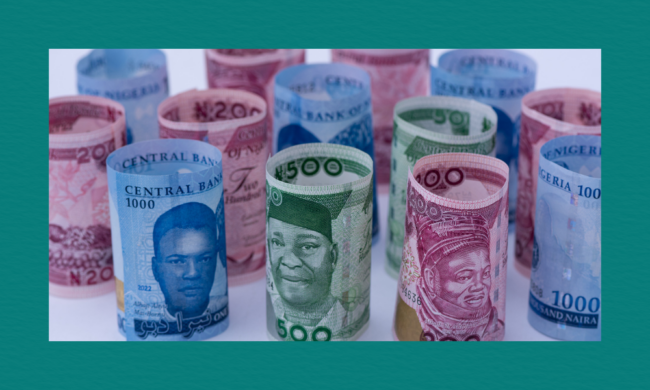
Rolled Nigerian naira banknotes of various denominations standing upright on a flat surface.

Hiding the beneficial owner and the proceeds of corruption

Harvey, Integrity Systems, International ArchitectureBy GI ACE20/06/2019Leave a comment

Researcher Jackie Harvey discusses GI-ACE project nvestigating how the current international anti-corruption frameworks function within Nigeria and how they can be better targeted to reduce opportunities for the proceeds of corruption to be moved across the globe while the beneficial owner remains hidden.

A person sits outdoors in a rural village setting, wearing a brightly patterned outfit with large orange and blue floral designs and a patterned headscarf. Blurred buildings, a dirt path, and vegetation appear in the background.

Realising the dream of Pan-African trade: Giving women voice in improving borders

Klopp, Subnational & SectoralBy GI ACE12/06/2019Leave a comment

GI-ACE research Jacqueline Klopp explores the wider transformation needed for more seamless and integrated borders to become a Pan-African reality, rather than simply a dream.

A close-up of a hand writing on a sheet of paper on a table, with additional papers displaying charts and graphs spread around. Soft light filters through vertical blinds in the background, creating a focused indoor workspace.

How effective are beneficial ownership checks?

Heathershaw, International ArchitectureBy GI ACE05/06/2019Leave a comment

GI-ACE researcher John Heathershaw discusses project investigating laundering of monies and reputations by professional enablers for African and Central Asian elites.

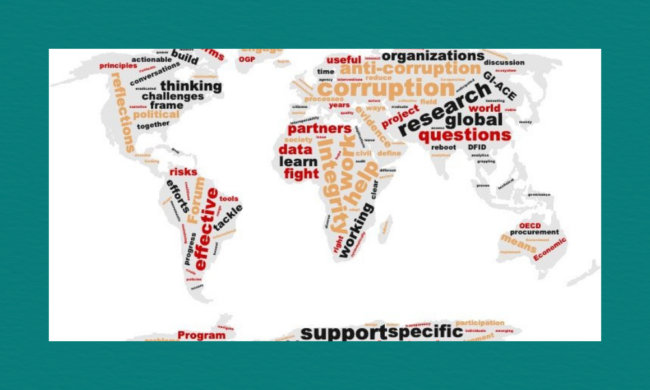
A world map formed from clustered words in varying sizes and colours, including terms like “research,” “corruption,” “anti‑corruption,” “global,” and “integrity,” arranged to outline the continents and evoke themes of international collaboration and accountability.

How to reduce corruption: Reflections, including from the Paris Integrity Forum

UncategorizedBy GI ACE30/05/2019Leave a comment

How do we – organizations and individuals working to strengthen transparency, accountability, and participation – more effectively fight corruption? For many of us, this is perhaps the perennial question.

Two people in dark suits exchange a concealed stack of U.S. dollar bills, their hands partially overlapping against a dark background, suggesting a secretive or illicit transaction.

Kicking off GI-ACE: Three Anti-Corruption Themes & 14 Projects

UncategorizedBy GI ACE23/01/2019Leave a comment

The Global Integrity Anti-Corruption Evidence (GI-ACE) programme supports 14 research partners around the world in generating actionable evidence that policy makers, practitioners, and advocates can use to design and implement more effective anti-corruption programmes.

A hand holding a piece of chalk writes the words “THEORY” and “PRACTICE” on a dark chalkboard, with curved arrows connecting the two terms in a circular loop.

Introducing the Global Integrity Anti-Corruption Evidence (GI-ACE) programme

UncategorizedBy GI ACE15/11/2018Leave a comment

We are delighted to announce a new partnership between Global Integrity (GI) and the UK Department for International Development (DFID): The Global Integrity Anti-Corruption Evidence Programme (GI-ACE).

←1
23
…45678←
Go to Top

GI ACE is funded by the UK government’s Foreign, Commonwealth & Development Office (FCDO) through its Global Research and Technology Development portfolio.

About

  • About
  • Our Team
  • Contact Us

Our Work

  • Research themes
  • Events

Resources

  • Blogs
  • Publications

Connect with us

If you've used any of GI ACE's research to inform policy and/or practice, let us know by sending an email at gi-ace@sussex.ac.uk. © 2026 GI ACE. All rights reserved. Hosted at the University of Sussex by the Centre for the Study of Corruption.