Authors: Theodore Alysandratos, Abigail Barr, Cormac Bryce, Thorsten Chmura, Elizabeth David-Barrett, and Marcus Giamattei
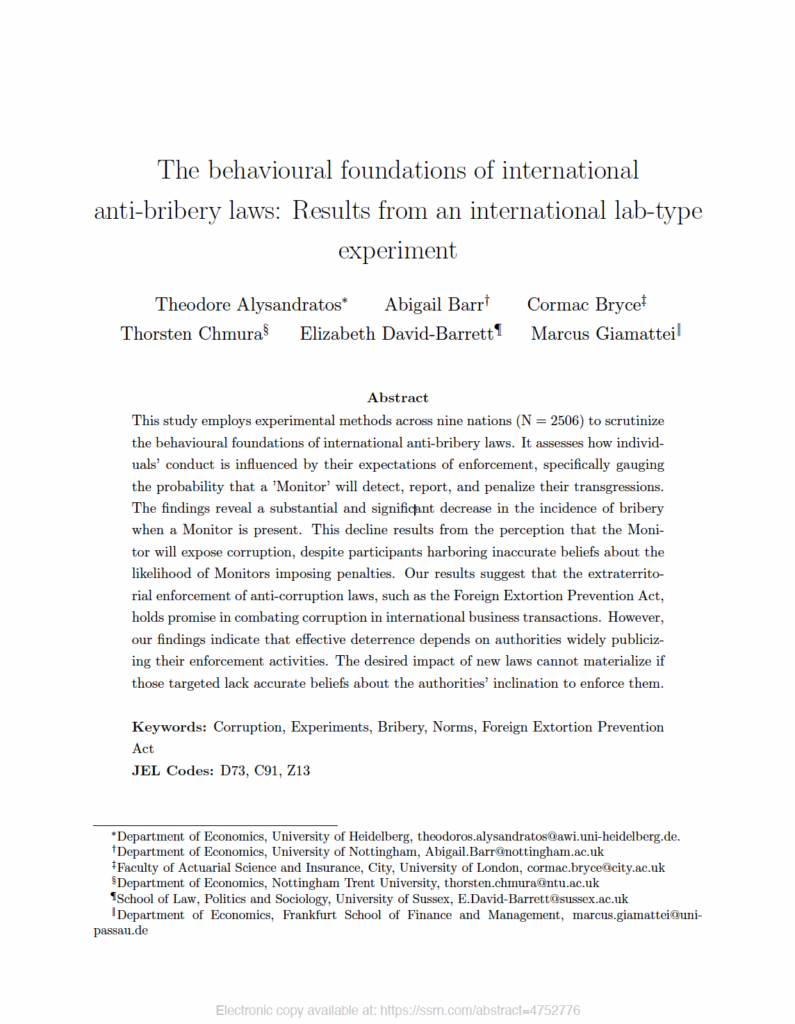
This study employs experimental methods across nine nations (N = 2506) to scrutinize the behavioural foundations of international anti-bribery laws. It assesses how individuals’ conduct is influenced by their expectations of enforcement, specifically gauging the probability that a ’Monitor’ will detect, report, and penalize their transgressions. The findings reveal a substantial and significant decrease in the incidence of bribery when a Monitor is present. This decline results from the perception that the Monitor will expose corruption, despite participants harboring inaccurate beliefs about the likelihood of Monitors imposing penalties. Our results suggest that the extraterritorial enforcement of anti-corruption laws, such as the Foreign Extortion Prevention Act, holds promise in combating corruption in international business transactions. However, our findings indicate that effective deterrence depends on authorities widely publicizing their enforcement activities. The desired impact of new laws cannot materialize if those targeted lack accurate beliefs about the authorities’ inclination to enforce them.