State Capture and Development
State capture is an extremely harmful variant of corruption. Its distinctive and complex characteristics erode democratic institutions and norms, while concentrating power and influence in the hands of narrow interest…
Sector-Based Action Against Corruption: A Guide for Organisations and Professionals is a book by Mark Pyman and Paul Heywood. It sets out their SFRA approach to tackling corruption, encompassing four…
Join us for the launch of the groundbreaking Regulation of Illicit Financial Flows (RIFF) dataset. Join us for the launch of the groundbreaking Regulation of Illicit Financial Flows (RIFF) dataset—the…
In this session Jan Meyer-Sahling discusses his work exploring ethical leadership training as a tool to combat corruption, drawing on evidence from Nepal and Bangladesh. The findings demonstrate that ethics…
Illicit Financial Flows have long been recognized for their destabilizing impact on economies, yet their role in enabling corruption and institutional capture, related to sanctions evasion and sustaining military conflicts…
Financial institutions serve as the circulatory system of modern economies but, when corrupted, also as the lifeline of illicit wealth. By collating insights from dozens of journalistic reports in the…
This seminar presents emerging insights from RUSI’s Interrogating Corruption Risk in Voluntary Carbon Markets project. Drawing on early evidence and case studies, the discussion explores how market volatility, weak oversight,…
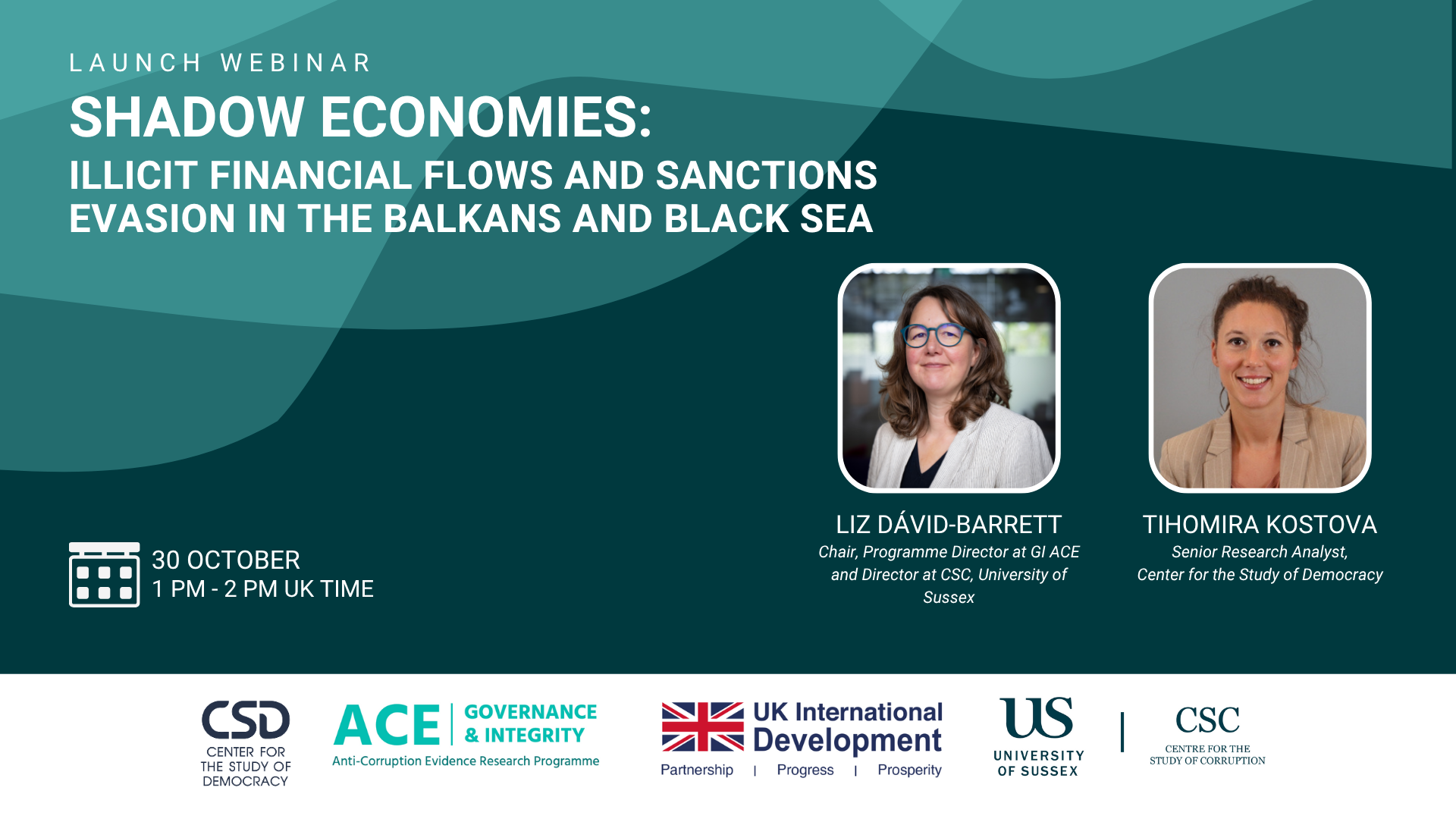
This webinar will launch the new research paper Shadow Economies: The Rise of Illicit Networks and Alternative Markets in Sanctions Circumvention. The study examines how illicit financial flows linked to…
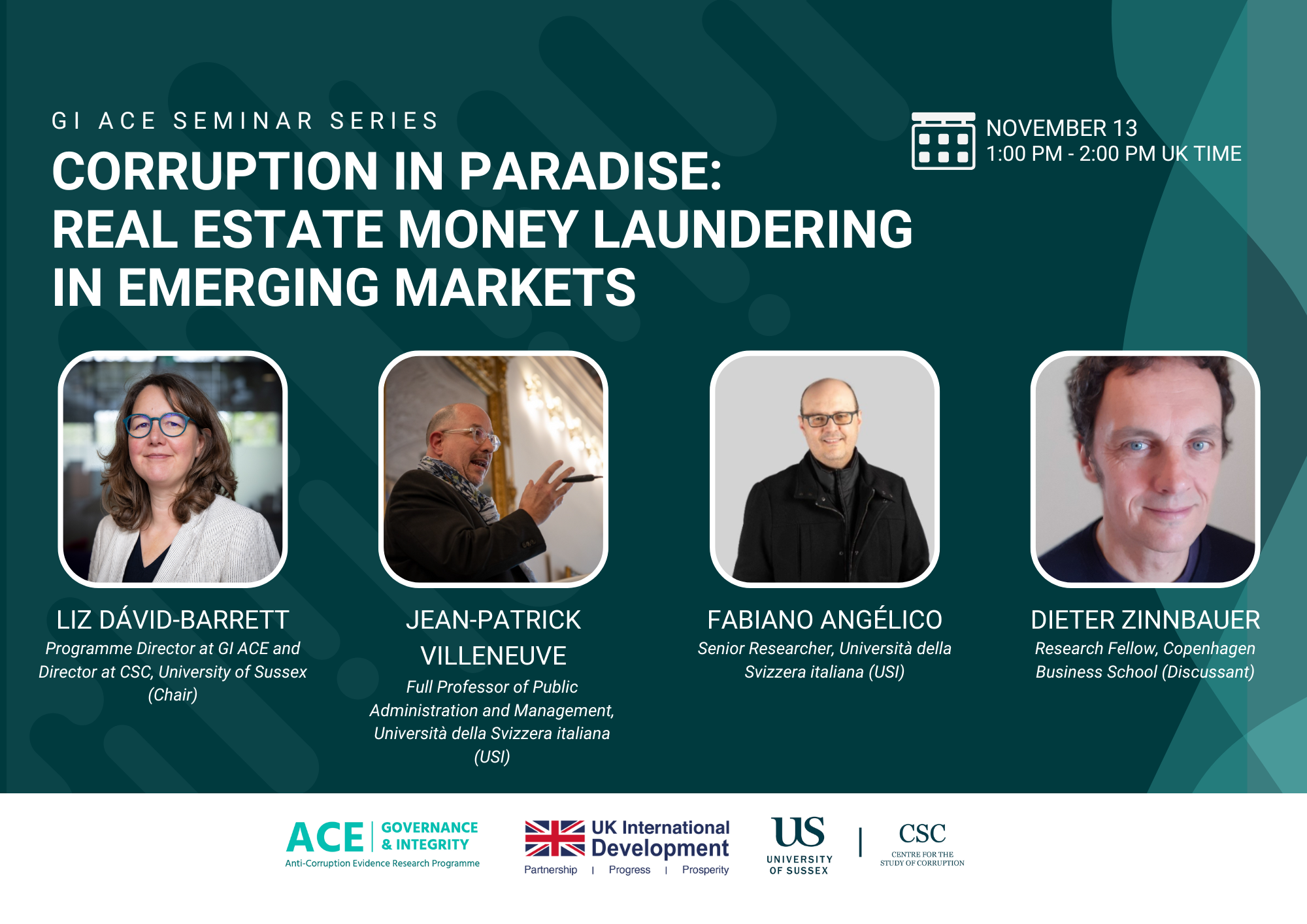
This seminar examines real estate-linked money laundering in the Global South, focusing on Brazil, Kenya, and Indonesia, revealing how rapid urbanization, particularly in touristic destinations, has enabled different actors to exploit weak enforcement systems. The research documents severe consequences, including distorted housing markets, while demonstrating that current international AML framework for the real estate sector fails in emerging markets.
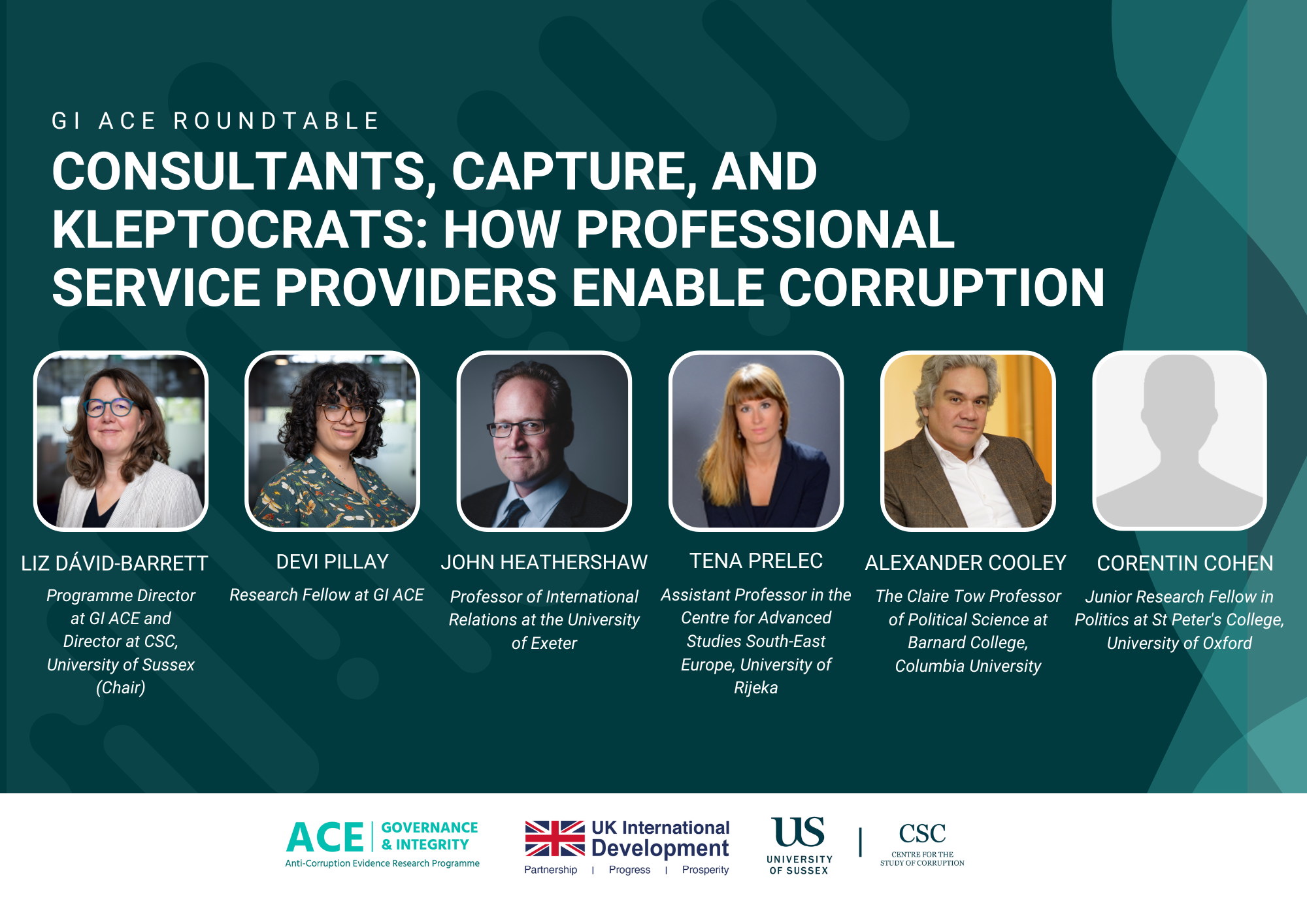
A roundtable exploring how consultancies, legal firms, and intermediaries enable cross-border illicit influence, featuring leading GI ACE scholars and partners.
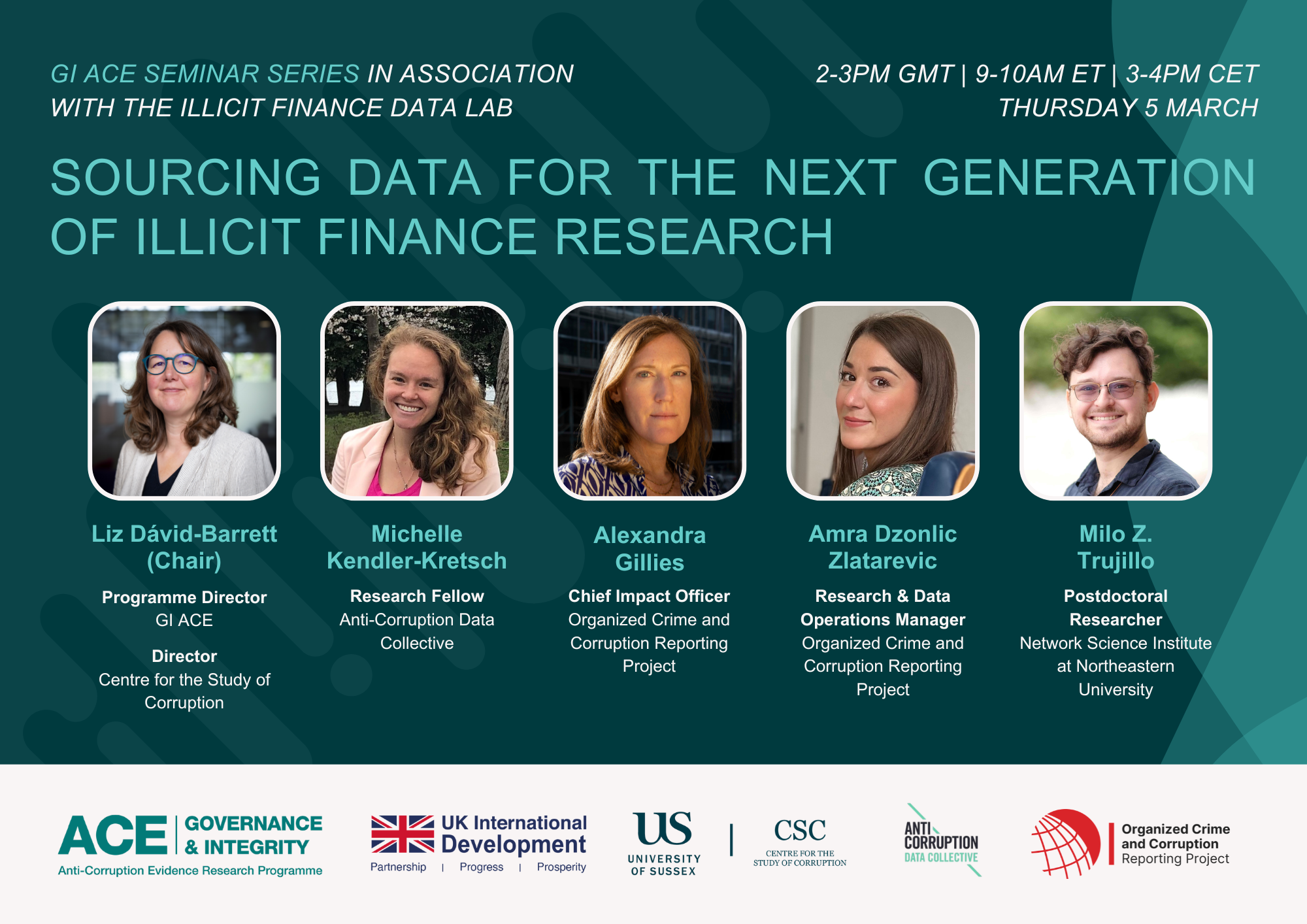
This seminar brings together David Szakonyi and Tom Mayne, chaired by Liz Dávid-Barrett, to examine how leaked and sensitive datasets - often originating from media organisations - can support research into corruption and illicit finance. Drawing on GI ACE projects using leaked banking data from the DRC and mapping enabler networks, the seminar discusses both the opportunities and challenges of working with such materials. Delivered in collaboration with the Illicit Finance Data Lab (ACDC & OCCRP).
This seminar explores how researchers can overcome the practical and technical obstacles that make it difficult to access, clean, and use diverse datasets on illicit finance, corruption, and organised crime.
Eric Umar and Dina Balabanova present the most recent findings from their GI ACE project 'Addressing corruption in the crisis response of the Malawian health system'.
This GI ACE roundtable brings together experts from across the globe to examine how countries emerging from deep institutional distortion have approached recovery – and what insights may be relevant for contexts now facing a potential opening.
Dr Abdullahi Bello and Prof. Jackie Harvey discuss reforms made by Nigeria’s Code of Conduct Bureau since 2024, which were partially influenced by their GI ACE project.