• GI-ACE Weekly Series: Mark Buntaine

    Zoom Event

    Register for this event now! Starting in November, each ACE research team will share how their research projects have aligned with the founding principles of the GI-ACE programme: developing anti-corruption interventions that are problem-focused, politically viable, have engaged practitioners throughout the research process, and provided avenues through which to measure the effects of the reforms. On February 10,…

  • GI-ACE Weekly Series: Dan Haberly

    Zoom Event

    Register for this event now! Starting in November, each ACE research team will share how their research projects have aligned with the founding principles of the GI-ACE programme: developing anti-corruption interventions that are problem-focused, politically viable, have engaged practitioners throughout the research process, and provided avenues through which to measure the effects of the reforms. On January 20,…

  • GI-ACE Weekly Series: Liz David-Barrett and Mihály Fazekas

    Zoom Event

    Register for this event now! Starting in November, each ACE research team will share how their research projects have aligned with the founding principles of the GI-ACE programme: developing anti-corruption interventions that are problem-focused, politically viable, have engaged practitioners throughout the research process, and provided avenues through which to measure the effects of the reforms. On February 3,…

  • GI-ACE Weekly Series: Ryan Jablonski

    Zoom Event

    Register for this event now! Starting in November, each ACE research team will share how their research projects have aligned with the founding principles of the GI-ACE programme: developing anti-corruption interventions that are problem-focused, politically viable, have engaged practitioners throughout the research process, and provided avenues through which to measure the effects of the reforms. On February 24,…

  • GI-ACE Weekly Series: Thorsten Chmura

    Zoom Event

    Register for this event now! Starting in November, each ACE research team will share how their research projects have aligned with the founding principles of the GI-ACE programme: developing anti-corruption interventions that are problem-focused, politically viable, have engaged practitioners throughout the research process, and provided avenues through which to measure the effects of the reforms. On March 3,…

  • Illicit Financial Flows & Russia’s Foreign Policy

    Open Gov Hub 1100 13th Street NW, Suite 800, Washington, DC, United States

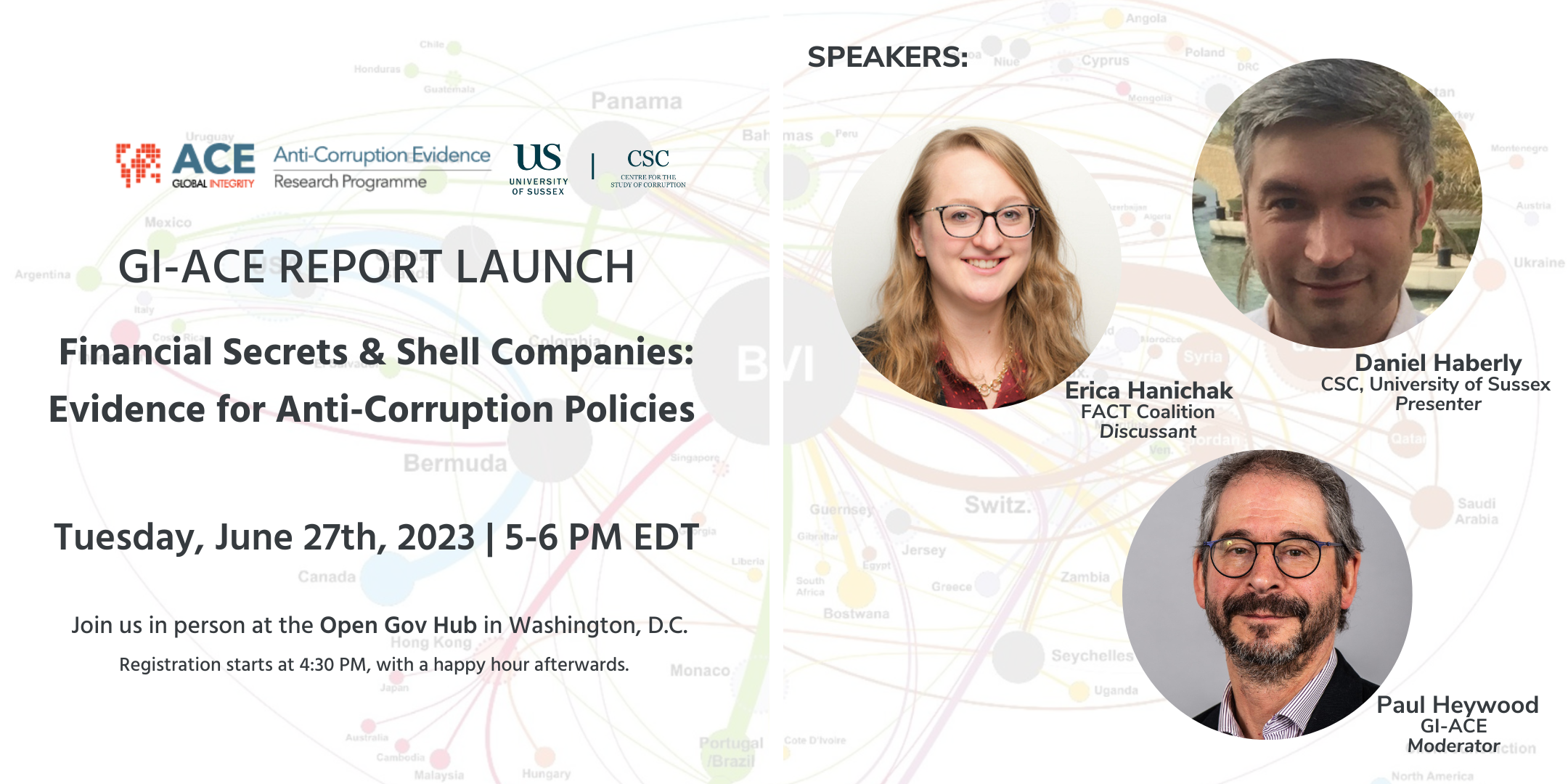
    Video recording here   A joint event on ‘Illicit financial flows and Russia’s foreign policy: Frameworks to detangle the dangers’ will be held on 15 June at 14:00 UK time, co-hosted by Global Integrity & the German Marshall Fund of the United States. This hybrid event will be held at Open Gov Hub in Washington DC…

  • Do All Drug Routes Lead to Violence?: Trafficking in Central Asia

    Open Gov Hub 1100 13th Street NW, Suite 800, Washington, DC, United States

    Video recording here   Join us for a conversation on the relationship between state structures and organised crime in developing states on 16 September at 10:00 EDT, co-hosted by SOC-ACE, a research programme funded by UK AID. In this event, researchers Dr. Erica Marat and Dr. Gulzat Botoeva will be joined by Alexei Trochev and…

  • Commodities and Corruption

    Wallacespace Clerkenwell Green, London, United Kingdom

    Video recording here   The commodity trading sector has historically been vulnerable to multiple forms of corruption, including bribery, mispricing, embezzlement, and trade-based money laundering. Today, these longstanding risks are compounded by the fragmentation of the global trading system in an era of rising populism, and by global shocks to commodity markets like climate change…

  • Procurement Reform: Corruption risks, Emergencies & Effective Service Delivery

    The GI-ACE programme has a number of projects looking at corruption in public procurement, government responses to crises, and how civil society can contribute to the contract monitoring processes that drive transparency. In November, researchers from across GI-ACE project teams shared the stage with Global Integrity's COVID-19 Transparency and Accountability Project (CTAP) team to discuss…

  • State Capture and Development

    State capture is an extremely harmful variant of corruption. Its distinctive and complex characteristics erode democratic institutions and norms, while concentrating power and influence in the hands of narrow interest groups – in business, politics, or organised crime. This session explained how the concept has evolved, its mechanisms, and potential recovery strategies. It showcased a…

  • Tackling Corruption at the Sector Level

    Sector-Based Action Against Corruption: A Guide for Organisations and Professionals is a book by Mark Pyman and Paul Heywood. It sets out their SFRA approach to tackling corruption, encompassing four core elements. First, they argue corruption problems should be tackled at the level of the specific sector (like health, policing, or agriculture). At this level,…

  • The RIFF dataset launch: 30-years of financial secrecy and AML reform trends

    Join us for the launch of the groundbreaking Regulation of Illicit Financial Flows (RIFF) dataset. Join us for the launch of the groundbreaking Regulation of Illicit Financial Flows (RIFF) dataset—the most comprehensive resource to date tracking long-term change in the global IFF regulatory landscape. Developed with support from the GI ACE programme and the Tax…

  • Ethical Leadership: Lessons from Ethics Training in the Global South

    Zoom Event

    In this session Jan Meyer-Sahling discusses his work exploring ethical leadership training as a tool to combat corruption, drawing on evidence from Nepal and Bangladesh. The findings demonstrate that ethics training, often overlooked in the Global South, can drive behaviour change, reshape attitudes, and support the modernisation and professionalisation of public services. Much of this…

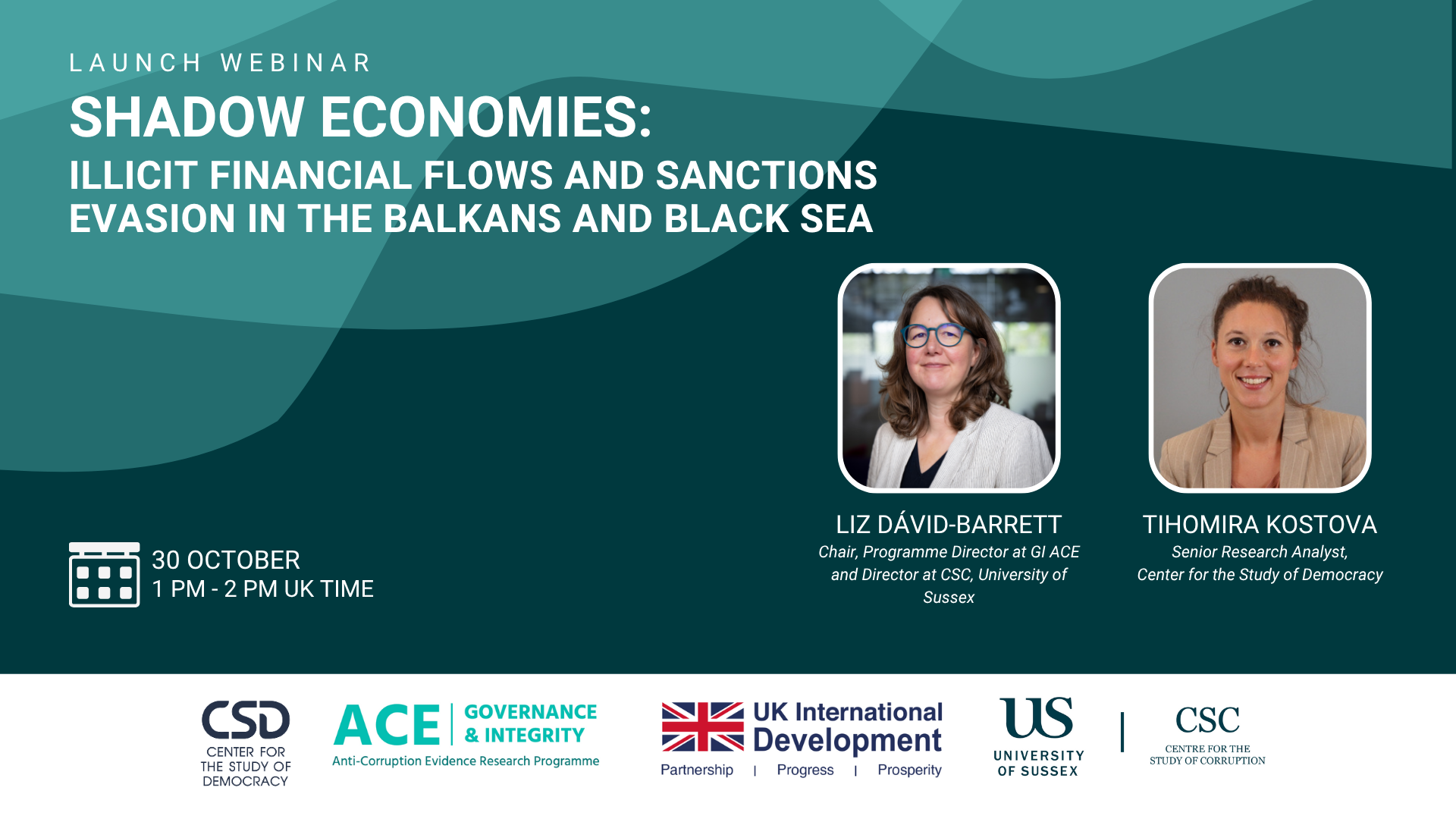
  • Hidden Trade Routes: Illicit Networks and Alternative Markets in Sanctions

    Zoom Event

    Illicit Financial Flows have long been recognized for their destabilizing impact on economies, yet their role in enabling corruption and institutional capture, related to sanctions evasion and sustaining military conflicts has received less mainstream attention in comparison to issues like tax evasion or organized crime. How state capture and corrupt practices within governments and institutions…

  • Inside the Congo Hold-Up: How a Captured Bank Enabled Grand Corruption

    Zoom Event

    Financial institutions serve as the circulatory system of modern economies but, when corrupted, also as the lifeline of illicit wealth. By collating insights from dozens of journalistic reports in the Congo Hold-Up investigation, a new briefing by the Anti-Corruption Data Collective (ACDC) and the Platform to Protect Whistleblowers in Africa (PPLAAF) examines how BGFIBank in…

  • Scoping Corruption in Voluntary Carbon Markets

    Zoom Event

    This seminar presents emerging insights from RUSI’s Interrogating Corruption Risk in Voluntary Carbon Markets project. Drawing on early evidence and case studies, the discussion explores how market volatility, weak oversight,…

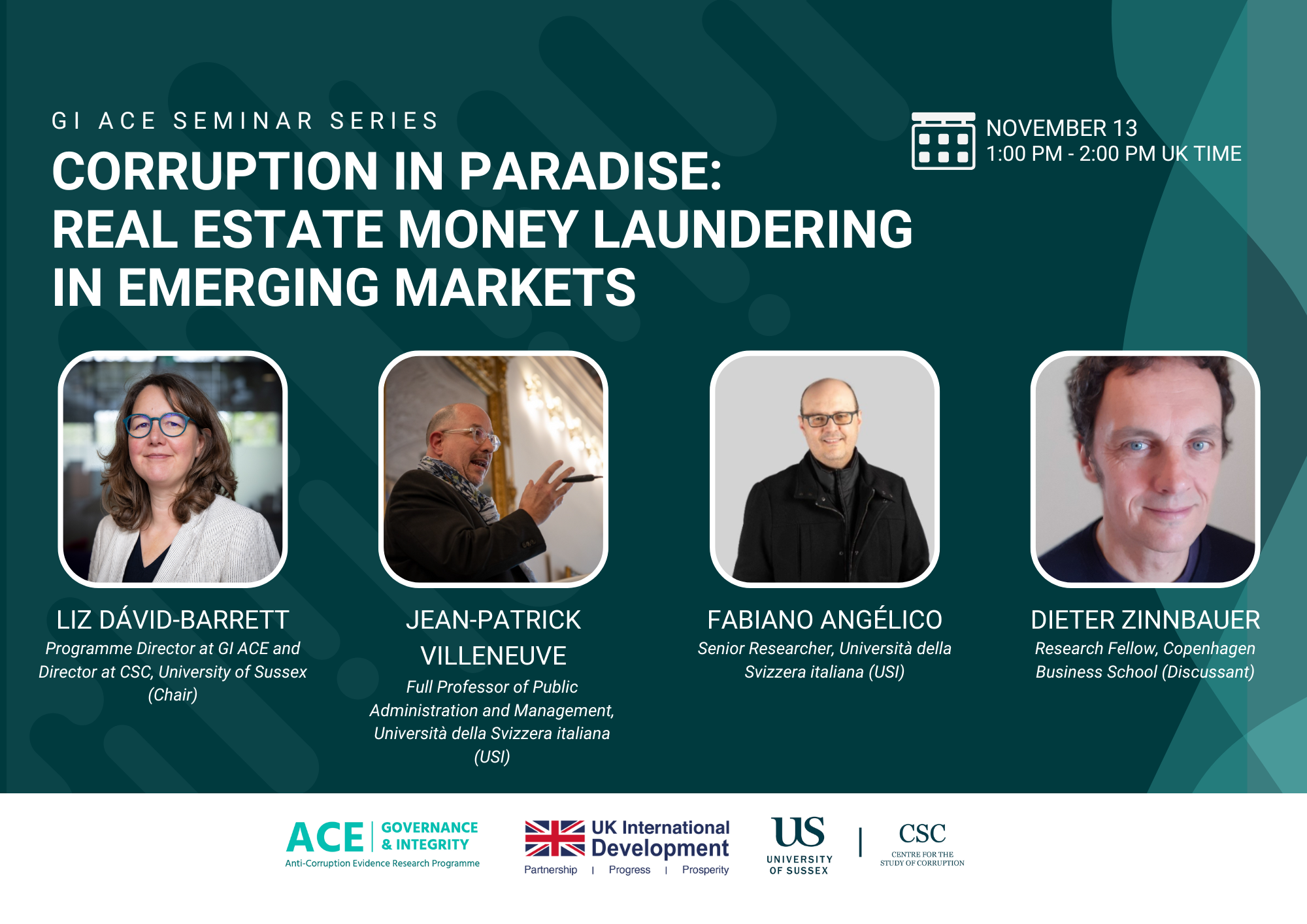
  • Corruption in Paradise: Real Estate Money Laundering in Emerging Markets

    Zoom Event

    This seminar examines real estate-linked money laundering in the Global South, focusing on Brazil, Kenya, and Indonesia, revealing how rapid urbanization, particularly in touristic destinations, has enabled different actors to exploit weak enforcement systems. The research documents severe consequences, including distorted housing markets, while demonstrating that current international AML framework for the real estate sector fails in emerging markets.

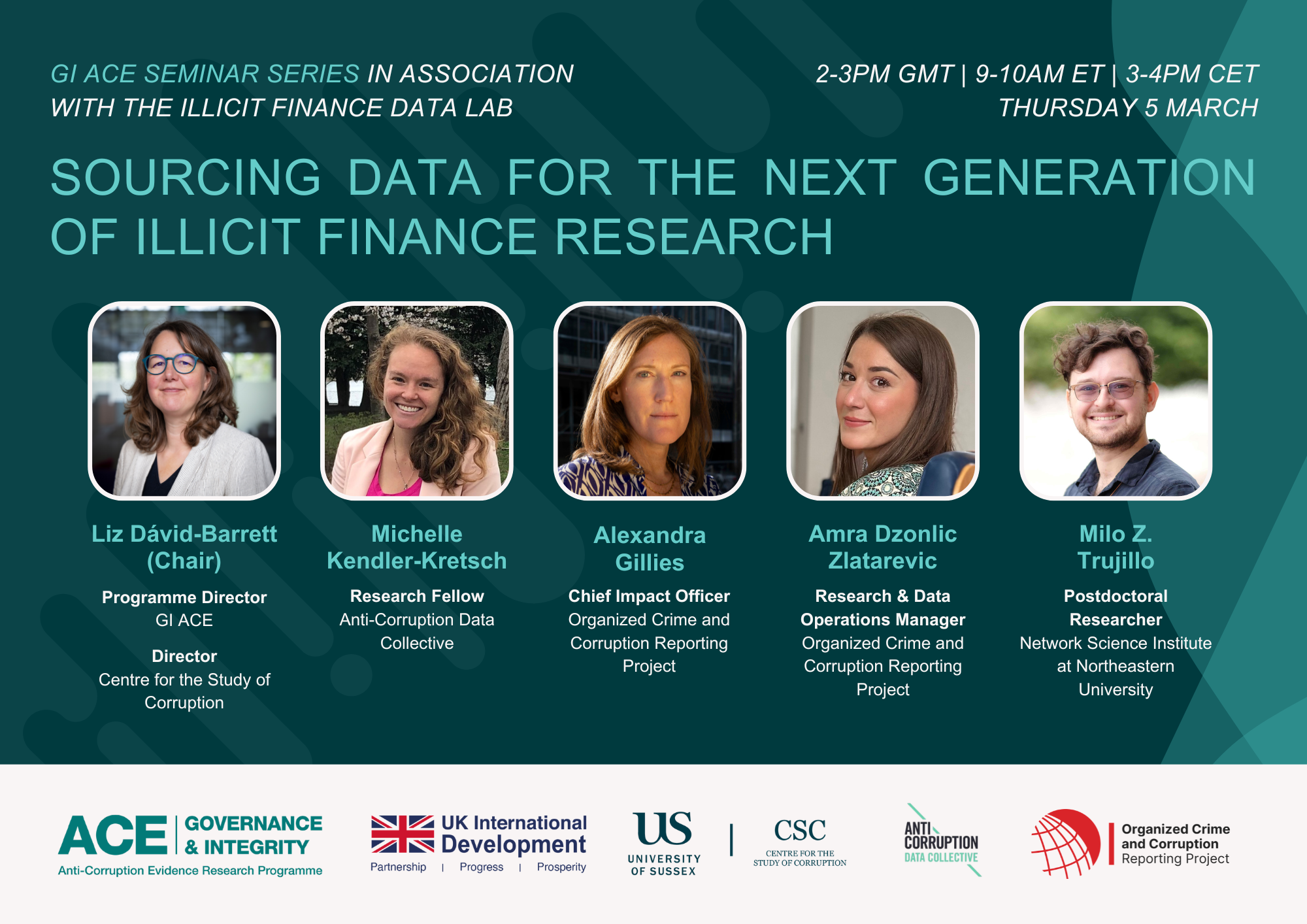
  • The promise and perils of using leaked and sensitive data to research illicit finance

    Zoom Event

    This seminar brings together David Szakonyi and Tom Mayne, chaired by Liz Dávid-Barrett, to examine how leaked and sensitive datasets - often originating from media organisations - can support research into corruption and illicit finance. Drawing on GI ACE projects using leaked banking data from the DRC and mapping enabler networks, the seminar discusses both the opportunities and challenges of working with such materials. Delivered in collaboration with the Illicit Finance Data Lab (ACDC & OCCRP).