
Skip to content

The Centre for the Study of Corruption

X page opens in new windowLinkedin page opens in new window
Governance & Integrity Anti-Corruption Evidence
  • About
  • Our work
    • Research themes
      • Global finance and the enablers of corruption
        • Corruption in Paradise: An ecology of money laundering through real estate in the touristic global south
        • Identifying enabler networks and their vulnerabilities
        • Gatekeepers, enablers or technicians: The contested interpretation of lawyers as facilitators of kleptocracy and grand corruption
        • Does transparency bring cleanliness? Offshore financial secrecy reform and corruption control
        • Hiding the beneficial owner and the proceeds of corruption
      • Crisis responses and corruption in vunerable sectors
        • Addressing corruption in the crisis response of the Malawian health system
        • Crisis emergencies, state responses and ‘windows’ of corruption in Uganda
        • The corrupting effect of political connections in public procurement through crises
      • Corruption risks in global trade and commerce
        • Lessons for combating illicit cross-border trade and money laundering from the Congo
        • Interrogating corruption risk in the climate transition: Trading in voluntary carbon markets
        • International deal-making, beliefs, and local social norms
        • Ethical border trading between Kenya and Uganda for small-scale businesses
      • State capture
        • Building resilience to state capture
        • Resisting state capture from the grassroots: Civil society efforts and public perceptions
        • Building institutional resilience to global illicit financial flows as enablers and drivers of state capture
      • Sectors and Institutions
        • Fighting high-level corruption in Africa: Learning from effective law enforcement
        • Addressing bribery in the Tanzanian health sector: A behavioural approach
        • Detecting and deterring medication theft: A field study in health clinics in Malawi
        • Curbing corruption in procurement using ‘red flags’ risk indicators
      • Integrity systems
        • Cities of integrity: Urban planning and corruption in Africa
        • Can positive public recognition lead to good governance?
        • Harnessing informality: Designing anti-corruption network interventions and strategic use of legal instruments
        • Centralised versus decentralised monitoring to reduce corruption: Insights from comparisons across Indian state
        • Civil service reform and anti-corruption: Does ethics training reduce corruption in the civil service?
    • Fellowship
    • Rethinking Anti-Corruption
    • From Research to Practice
  • Resources
    • Publications
    • Blogs
    • Multimedia
    • Kickback – The Global AntiCorruption Podcast
    • Digital Library
  • News & events
    • Newsletter
    • GI ACE in the media
    • News from GI ACE
    • Upcoming Events
    • Previous Events
  • Contact
Search:
Search
  • About
  • Our work
    • Research themes
      • Global finance and the enablers of corruption
        • Corruption in Paradise: An ecology of money laundering through real estate in the touristic global south
        • Identifying enabler networks and their vulnerabilities
        • Gatekeepers, enablers or technicians: The contested interpretation of lawyers as facilitators of kleptocracy and grand corruption
        • Does transparency bring cleanliness? Offshore financial secrecy reform and corruption control
        • Hiding the beneficial owner and the proceeds of corruption
      • Crisis responses and corruption in vunerable sectors
        • Addressing corruption in the crisis response of the Malawian health system
        • Crisis emergencies, state responses and ‘windows’ of corruption in Uganda
        • The corrupting effect of political connections in public procurement through crises
      • Corruption risks in global trade and commerce
        • Lessons for combating illicit cross-border trade and money laundering from the Congo
        • Interrogating corruption risk in the climate transition: Trading in voluntary carbon markets
        • International deal-making, beliefs, and local social norms
        • Ethical border trading between Kenya and Uganda for small-scale businesses
      • State capture
        • Building resilience to state capture
        • Resisting state capture from the grassroots: Civil society efforts and public perceptions
        • Building institutional resilience to global illicit financial flows as enablers and drivers of state capture
      • Sectors and Institutions
        • Fighting high-level corruption in Africa: Learning from effective law enforcement
        • Addressing bribery in the Tanzanian health sector: A behavioural approach
        • Detecting and deterring medication theft: A field study in health clinics in Malawi
        • Curbing corruption in procurement using ‘red flags’ risk indicators
      • Integrity systems
        • Cities of integrity: Urban planning and corruption in Africa
        • Can positive public recognition lead to good governance?
        • Harnessing informality: Designing anti-corruption network interventions and strategic use of legal instruments
        • Centralised versus decentralised monitoring to reduce corruption: Insights from comparisons across Indian state
        • Civil service reform and anti-corruption: Does ethics training reduce corruption in the civil service?
    • Fellowship
    • Rethinking Anti-Corruption
    • From Research to Practice
  • Resources
    • Publications
    • Blogs
    • Multimedia
    • Kickback – The Global AntiCorruption Podcast
    • Digital Library
  • News & events
    • Newsletter
    • GI ACE in the media
    • News from GI ACE
    • Upcoming Events
    • Previous Events
  • Contact

Author Archives: Suzana Salim

A close-up of a military uniform in camouflage fabric featuring a sewn patch of the Ukrainian flag with a blue-and-yellow design and a gold trident emblem in the centre.

Overcoming resilience of systemic corruption in Ukraine’s defence sector

Blogs, Building resilience to state capture, GI ACE, GI ACE Phase 2By Suzana Salim21/07/2026Leave a comment

Anastasiia Kudlenko is a GI ACE Researcher who works on the Building resilience to state capture project. Her research focuses on state capture and state capture recovery, community and societal…

Two people sit at a desk in an office, viewed through reflective glass that overlays faint images of bookshelves and objects behind them. Both wear glasses and focus on documents or a device; one points at the desk while the other listens through earphones. The layered reflections create a complex, multi‑depth visual effect.

A new documentary shows the central role of whistleblowers in providing anti-corruption evidence

Blogs, GI ACE, GI ACE Phase 2By Suzana Salim30/06/2026Leave a comment

Michael Hornsby from the Anti-Corruption Data Collective (ACDC) describes how ACDC’s GI-ACE project with the Platform to Protect Whistleblowers in Africa (PPLAAF) seeks to support systemic change, honouring the bravery…

A view of London’s skyline featuring the Gherkin, the Cheesegrater, and other modern skyscrapers, with several construction cranes visible among the buildings. Older stone architecture sits in the foreground beneath a partly cloudy sky.

Cross-cutting insights from GI ACE: Professional enabling

Blogs, GI ACE, GI ACE Phase 2By Suzana Salim28/05/2026Leave a comment

The Cross-cutting insights from GI ACE blog series presents key take-aways on themes that run through the programme’s research, highlighting how individual research projects can contribute to building a bigger…
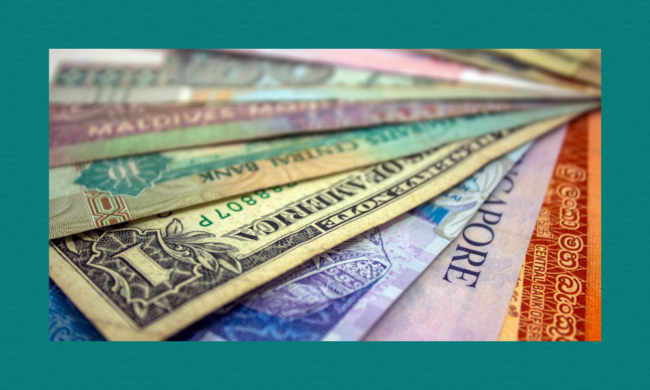
Close-up of assorted international banknotes from multiple countries arranged in a fan-like spread, showing varied colours, designs, and denominations.

Illicit financial flows – evidence from GI ACE

Blogs, GI ACE, GI ACE Phase 2By Suzana Salim27/04/2026Leave a comment

Devi Pilay, GI ACE Researcher, summarises the findings of ‘Fighting illicit financial flows: key learnings from GI ACE research’, a synthesis document she authored that presents insights from our programme’s…
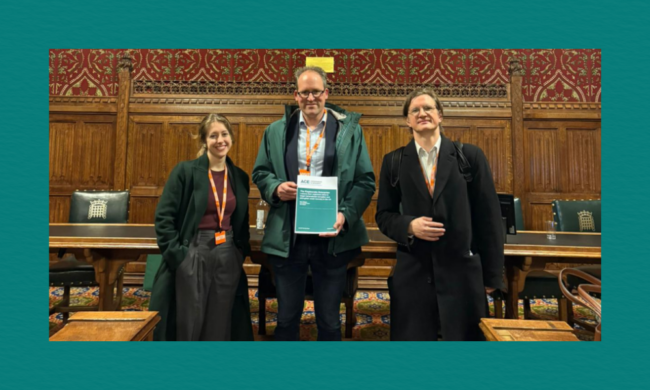
Maria Nizzero, John Heathershaw, and Tom Mayne at the publication launch of 'The Kleptocratic Enterprise: Lessons from organised crime to target transnational corruption and strengthen asset recovery in the UK'

Kleptocracy has gone global – our laws haven’t

Blogs, GI ACE, GI ACE Phase 2, HeathershawBy Suzana Salim25/03/2026Leave a comment

John Heathershaw argues that we need a legal conception of kleptocracy fit for our current era of personalist global politics where transnational inter-elite relations and illicit activity have been revealed to span Epstein, Putin,…

A red double-decker bus marked with route 159 drives past the Palace of Westminster in London on a sunny day. The Elizabeth Tower, housing Big Ben, rises prominently with its Gothic spires and ornate stonework. Road markings read “BUS LANE,” and pedestrians and vehicles share the vibrant urban scene under a clear blue sky.

Evaluating the evidence base for the UK’s 2025 Anti-Corruption Strategy

Blogs, GI ACE, GI ACE Phase 2By Suzana Salim23/01/2026Leave a comment

Professor Robert Barrington from the Centre for the Study of Corruption looks at the use of research and evidence in the UK’s new Anti-Corruption Strategy. Anti-corruption plans and strategies have…

The exterior of the International Monetary Fund headquarters, showing a tall office building behind a blue IMF sign with the organisation’s globe-and-laurel emblem.

Countering state capture: what role can the IMF play?

Blogs, Building resilience to state capture, David-Barrett, David-Barrett_ext, GI ACE, GI ACE Phase 2By Suzana Salim08/12/2025Leave a comment

Tom Shipley is a Research Fellow at the Centre for the Study of Corruption, embedded within the GI ACE programme. His work focuses on state capture in Sub-Saharan Africa and…

Former Chief Justice Raymond Zondo and President Cyril Ramaphosa

The legacy of the Zondo Commission

Blogs, Building resilience to state capture, GI ACE, GI ACE Phase 2By Suzana Salim04/12/2025Leave a comment

Devi Pillay is a research fellow at GI ACE and a research associate at the Public Affairs Research Institute (PARI) in South Africa. She was previously a researcher and analyst for the…

A nurse in a blue uniform examines a young child’s hand in a hospital ward, with beds, medical equipment, and floral wall art visible in the background.

Addressing corruption in crises matters: towards effective crisis-responses in the Malawian health system

Baez Camargo, Blogs, Corruption in the Crisis Response of the Malawian Health System, GI ACE, GI ACE Phase 2By Suzana Salim06/11/2025Leave a comment

Claudia Baez Camargo (Head of Prevention, Research & Innovation, Basel Institute on Governance) and Dina Balabanova, Professor of Health Systems and Policy, London School of Hygiene and Tropical Medicine share…

→123→
Go to Top

GI ACE is funded by the UK government’s Foreign, Commonwealth & Development Office (FCDO) through its Global Research and Technology Development portfolio.

About

  • About
  • Our Team
  • Contact Us

Our Work

  • Research themes
  • Events

Resources

  • Blogs
  • Publications

Connect with us

If you've used any of GI ACE's research to inform policy and/or practice, let us know by sending an email at gi-ace@sussex.ac.uk. © 2026 GI ACE. All rights reserved. Hosted at the University of Sussex by the Centre for the Study of Corruption.