
John Heathershaw argues that we need a legal conception of kleptocracy fit for our current era of personalist global politics where transnational inter-elite relations and illicit activity have been revealed to span Epstein, Putin, and Gulf monarchies.
It is surely not a coincidence that Andrew Mountbatten-Windsor (formerly known as Prince), was both a friend of Jeffrey Epstein and on good terms with some of the world’s most notorious kleptocrats, such as those of Kazakhstan. Nor that Peter Mandelson was a friend of both Epstein and Russian oligarch Oleg Deripaska. For kleptocracy researchers, the parallels between Epstein’s world and the networks we study, often centered on autocrats and their family offices, are notable. While attention is rightly focused on the abuse of women and girls, Epstein presided over a global network of elites brought together by a much wider array of illicit activities. Epstein’s networks imitate those of the personalist regimes in which a kleptocracy first emerges. They access investment opportunities and engage in reputation management not by the front door but by the side. For example, for both kleptocrats and “friends of Jeffrey”, entry to highly selective private schools for their prodigies is achieved by knowing the right people, not by academic merit. For both, professional enablers and their concierge services are crucial. It is these enablers who broker access to status, influence, and, ultimately, power.
Following the dumps of mountains of data from the Panama Papers to the Epstein Files, the field of International Relations (IR) is finally paying attention to what we may call the personalist global politics of elites. With a history of focusing on states (from which it derived the category of “non-state actor”), IR is now beginning to recognise that much of the practice of global politics is shaped by elite networks. Once we recognise elite networks, we can see how Epstein was able to make connections across political divides and how geopolitical enemies go into business together because elites and their cronies benefit personally. This is what Seva Gunitksy calls “the personalist nature of global order”. IR scholars have used terms like “neo-royalist”, defined by Goddard and Newman (2025: 514) as “an international system structured by a small group of hyper-elites who use modern economic and military interdependencies to extract material and status resources for themselves”. Others use the older moniker “neo-feudalist” to capture these dynamics, but both these terms risk over-emphasising states and downplaying the role of markets. Most key actors in these networks are not in office and most of the power being exercised is private not public.
Why is private power increasingly important? Why has such personalism gone global? Why is kleptocracy on the rise? These are distinct but connected questions. More than fifty years of financial globalisation and deregulation have vastly increased the power of these professionals and increased capital flight. A more integrated global economy has facilitated not just the movement of capital across borders and the spread of transnational investments but new opportunities for “crony capitalism” and kleptocracy. The emergence of offshore finance and law since the 1960s parallels globalisation and is arguably one of its principal drivers. It is this globalisation of financial, legal, and related services which has driven the emergence of transnational forms of kleptocracy which link a kleptocrat’s country of origin to countries of destination which become safehouses for their assets.
Since global norms regarding transparency and accountability have also arisen, authoritarian kleptocrats must rely on intricate networks of well positioned intermediaries located in many countries to manage their assets; this is what characterises the “rise of kleptocracy”. The “spider’s web” of tax havens and secrecy jurisdictions operating under English common law – with its strong protections of property rights and privacy which are perfect for kleptocrats – combines the remnants of the British Empire. These include the British Overseas Territories (e.g. the British Virgin Islands), Crown Dependencies (e.g. Jersey), and former colonies which operate according to the rules of British capitalism (Dubai, Hong Kong, and Singapore being the leading new financial centres).
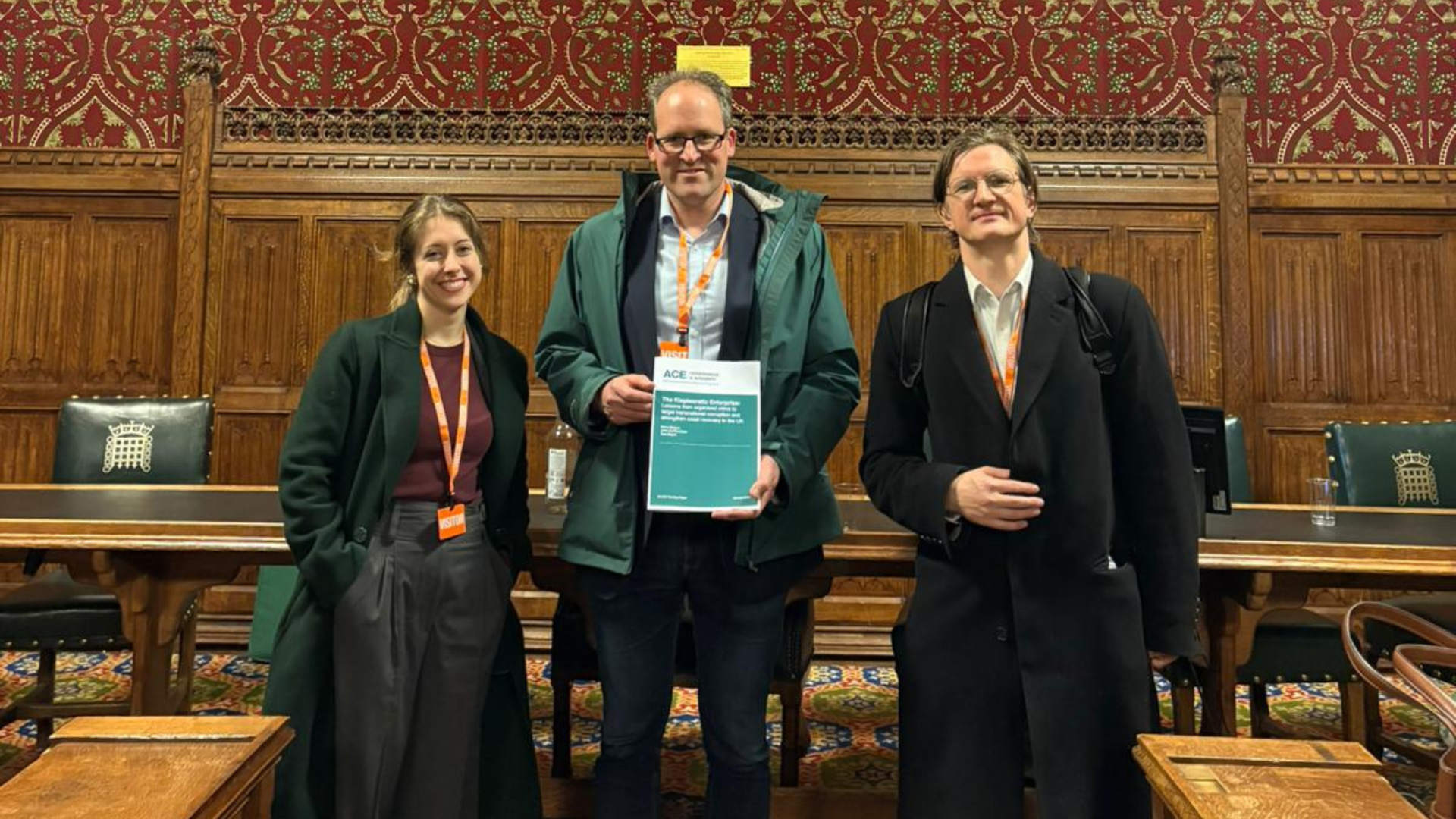
In short, globalisation has not replaced states with supranational bodies, but it has interwoven national and public bodies with personal and private interests. In a recent GI ACE paper, Maria Nizzero, Tom Mayne, and I argue that it has created the phenomenon of the kleptocratic enterprise. Contemporary kleptocrats are not merely state-bound figures; they increasingly operate through decentralised networks of intermediaries. These networks, and the associated illicit practices, resemble the structures of organised crime, with kleptocrats functioning less as rogue officials and more as franchise players within a global illicit economy. We define a kleptocratic enterprise as:
the transactions, relationships, and networks operating across borders for a person or entity whose wealth is fully or partially the product of kleptocratic rule, to hide and protect assets, acquire status, and achieve influence in a third country or countries (Heathershaw et al 2025, p. 12).
In practice, kleptocratic enterprises span both the global north and south, as well as decades of wealth acquisition based on political power and influence. They may operate as organised crime syndicates, but they may equally have perfectly legal ownership of your apartment building. Somewhere in the world, there may be a kleptocratic regime that only steals from its people and keeps all its assets onshore, but in decades of combined research we are yet to find one.
Our research identifies strong similarities between organised criminal enterprises and the way that modern kleptocracy operates: both types of network rely on complex structures, professional enablers, and global financial infrastructures, blending illicit funds with licit ones, with money often funnelled upward in a pyramid structure to the organisation’s leaders who remain the most hidden and protected. Unlike conventional criminal organisations, however, the political element inherent to kleptocratic conduct makes it harder to tackle. Separating this from the rest of the kleptocratic conduct – by focussing on the enterprise (and as a result the similarities with organised crime groups), rather than the individuals – could break the deadlock.
There are at least four anti-racketeering frameworks which have demonstrated benefits of enterprise-based approaches: the US Racketeer Influenced and Corrupt Organizations (RICO) Act, South Africa’s Prevention of Organised Crime Act, Switzerland’s criminal organisation statutes, and Italy’s Anti-Mafia Code. Across these legal frameworks, we have identified common features that directly address the barriers faced in kleptocracy cases:
- Targeting entire enterprises, rather than just individuals
- Building cases around patterns of conduct
- Combining civil and criminal powers for greater flexibility
- Relying on different evidentiary standards and types of evidence
- Justifying interventions by emphasising the broader societal and security impact of criminal enterprises
These models demonstrate that weak asset recovery outcomes are not inevitable, but are rather the product of framing and enforcement choices.
The bad news is that the kleptocratic enterprise is endemic to global politics and found as much in liberal democracies as in personalist regimes. But the good news is that existing conspiracy offences in many countries offer a template for identifying and prosecuting it as a form of organised crime. The traditional approach to kleptocracy as a type of highly corrupt regime is anachronistic. Kleptocracies continue to do business globally and legally long after their illegal acquisition of wealth in a home country took place.
Establishing the concept of the kleptocratic enterprise in different national and international contexts will be a process which is controversial and contested. Defence lawyers can and do claim that there is clear water between the ongoing business of a given enterprise and the criminal origins of some of their members and initial capital. We discuss some of the challenges and some encouraging examples of legal practice in the paper. In the long run, it will be for judges to decide whether the law can rightly recognise kleptocracy for what it is: a transnational criminal enterprise. But without such a legal innovation or something similar, it seems likely that both kleptocracy and personalist global politics will continue largely untouched by the rule of law.