
Skip to content

The Centre for the Study of Corruption

X page opens in new windowLinkedin page opens in new window
Governance & Integrity Anti-Corruption Evidence
  • About
  • Our work
    • Research themes
      • Global finance and the enablers of corruption
        • Corruption in paradise: an ecology of money laundering through real estate in the touristic global south
        • Identifying enabler networks and their vulnerabilities
        • Does transparency bring cleanliness? Offshore financial secrecy reform and corruption control
        • Hiding the beneficial owner and the proceeds of corruption
      • Crisis responses and corruption in vulnerable sectors
        • Addressing corruption in the crisis response of the Malawian health system
        • Crisis emergencies, state responses and ‘windows’ of corruption in Uganda
        • The corrupting effect of political connections in public procurement through crises
      • Corruption risks in global trade and commerce
        • Lessons for combating illicit cross-border trade and money laundering from the Congo
        • Interrogating corruption risk in the climate transition: Trading in voluntary carbon markets
        • International deal-making, beliefs, and local social norms
        • Ethical border trading between Kenya and Uganda for small-scale businesses
      • State capture
        • Building resilience to state capture
        • Resisting state capture from the grassroots: Civil society efforts and public perceptions
        • Building institutional resilience to global illicit financial flows as enablers and drivers of state capture
      • Sectors and Institutions
        • Fighting high-level corruption in Africa: Learning from effective law enforcement
        • Addressing bribery in the Tanzanian health sector: A behavioural approach
        • Detecting and deterring medication theft: A field study in health clinics in Malawi
        • Curbing corruption in procurement using ‘red flags’ risk indicators
      • Integrity systems
        • Cities of integrity: Urban planning and corruption in Africa
        • Can positive public recognition lead to good governance?
        • Harnessing informality: Designing anti-corruption network interventions and strategic use of legal instruments
        • Centralised versus decentralised monitoring to reduce corruption: Insights from comparisons across Indian state
        • Civil service reform and anti-corruption: Does ethics training reduce corruption in the civil service?
    • Fellowship
    • Rethinking Anti-Corruption
    • From Research to Practice
  • Resources
    • Publications
    • Blogs
    • Multimedia
    • Kickback – The Global AntiCorruption Podcast
  • News & events
    • Newsletter
    • GI ACE in the media
    • News from GI ACE
    • Upcoming Events
    • Previous Events
  • Contact
Search:
Search
  • About
  • Our work
    • Research themes
      • Global finance and the enablers of corruption
        • Corruption in paradise: an ecology of money laundering through real estate in the touristic global south
        • Identifying enabler networks and their vulnerabilities
        • Does transparency bring cleanliness? Offshore financial secrecy reform and corruption control
        • Hiding the beneficial owner and the proceeds of corruption
      • Crisis responses and corruption in vulnerable sectors
        • Addressing corruption in the crisis response of the Malawian health system
        • Crisis emergencies, state responses and ‘windows’ of corruption in Uganda
        • The corrupting effect of political connections in public procurement through crises
      • Corruption risks in global trade and commerce
        • Lessons for combating illicit cross-border trade and money laundering from the Congo
        • Interrogating corruption risk in the climate transition: Trading in voluntary carbon markets
        • International deal-making, beliefs, and local social norms
        • Ethical border trading between Kenya and Uganda for small-scale businesses
      • State capture
        • Building resilience to state capture
        • Resisting state capture from the grassroots: Civil society efforts and public perceptions
        • Building institutional resilience to global illicit financial flows as enablers and drivers of state capture
      • Sectors and Institutions
        • Fighting high-level corruption in Africa: Learning from effective law enforcement
        • Addressing bribery in the Tanzanian health sector: A behavioural approach
        • Detecting and deterring medication theft: A field study in health clinics in Malawi
        • Curbing corruption in procurement using ‘red flags’ risk indicators
      • Integrity systems
        • Cities of integrity: Urban planning and corruption in Africa
        • Can positive public recognition lead to good governance?
        • Harnessing informality: Designing anti-corruption network interventions and strategic use of legal instruments
        • Centralised versus decentralised monitoring to reduce corruption: Insights from comparisons across Indian state
        • Civil service reform and anti-corruption: Does ethics training reduce corruption in the civil service?
    • Fellowship
    • Rethinking Anti-Corruption
    • From Research to Practice
  • Resources
    • Publications
    • Blogs
    • Multimedia
    • Kickback – The Global AntiCorruption Podcast
  • News & events
    • Newsletter
    • GI ACE in the media
    • News from GI ACE
    • Upcoming Events
    • Previous Events
  • Contact

Daily Archives: 30/07/2019

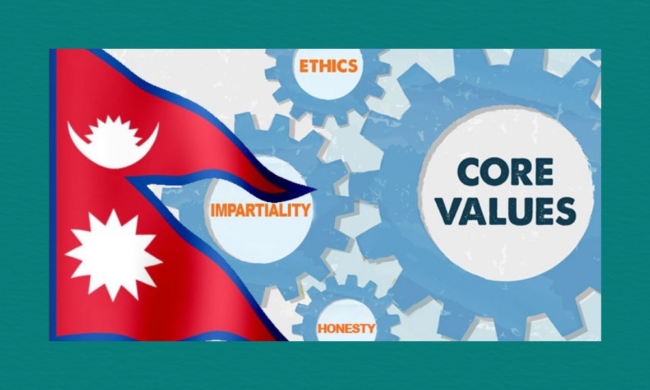
The Nepalese flag appears on the left, with its red double‑pennon shape and white moon and sun symbols. On the right, blue and white interlocking gears display the words “Ethics,” “Impartiality,” “Honesty,” and “Core Values,” visually linking national identity with guiding principles.

Toward a more professional and ethical civil service in Nepal

Integrity Systems, Meyer-Sahling, Subnational & SectoralBy GI ACE30/07/2019Leave a comment

Researcher Jan-Hinrik Meyer-Sahling discusses GI-ACE project taking up the challenge of developing a state-of-the-art ethics training for civil servants in order to contribute to the ambition of building a more professional and ethical civil service in Nepal.

Go to Top

GI ACE is funded by the UK government’s Foreign, Commonwealth & Development Office (FCDO) through its Global Research and Technology Development portfolio.

About

  • About
  • Our Team
  • Contact Us

Our Work

  • Research themes
  • Events

Resources

  • Blogs
  • Publications

Connect with us

If you've used any of GI ACE's research to inform policy and/or practice, let us know by sending an email at gi-ace@sussex.ac.uk. © 2026 GI ACE. All rights reserved. Hosted at the University of Sussex by the Centre for the Study of Corruption.